There's a Devil in That Jug, Boys - part 1, 1850-1900
by Tim Campbell · first published 10 February 2018 · his original post
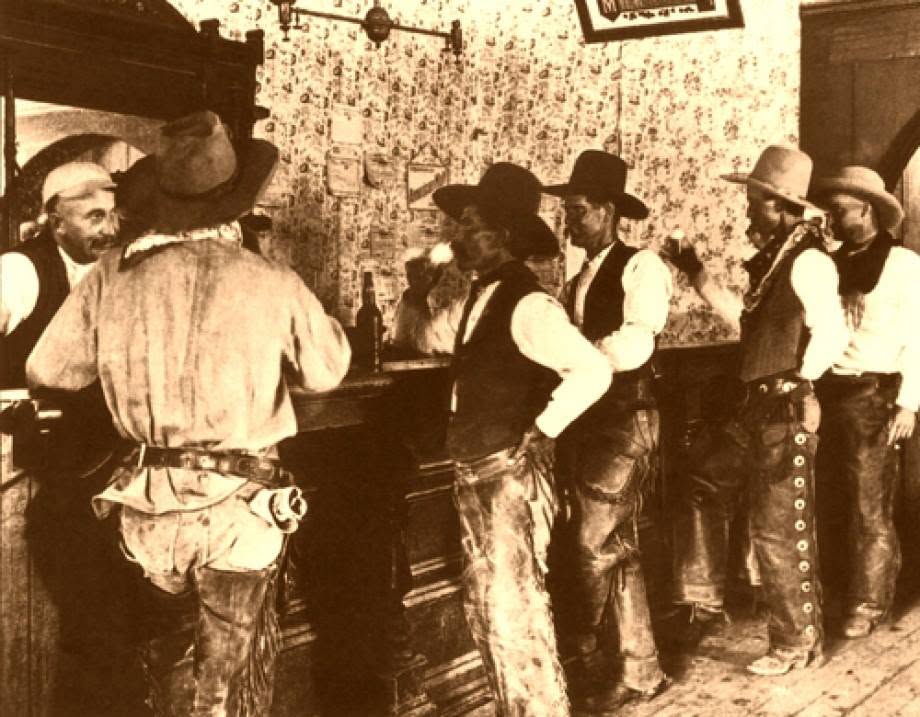
First called Possum Trot/Spanky, then Melton, then Richland, the city fathers of the little community 5 miles south of present day Blooming Grove met in 1852 and voted to change the name to Dresden. At this meeting a jug of whiskey was passed around to celebrate the venerated occasion. It was a simpler time, before temperance movements and prohibition battles. The only battles taking place involving alcohol was to see who could make the finest batch of moonshine.
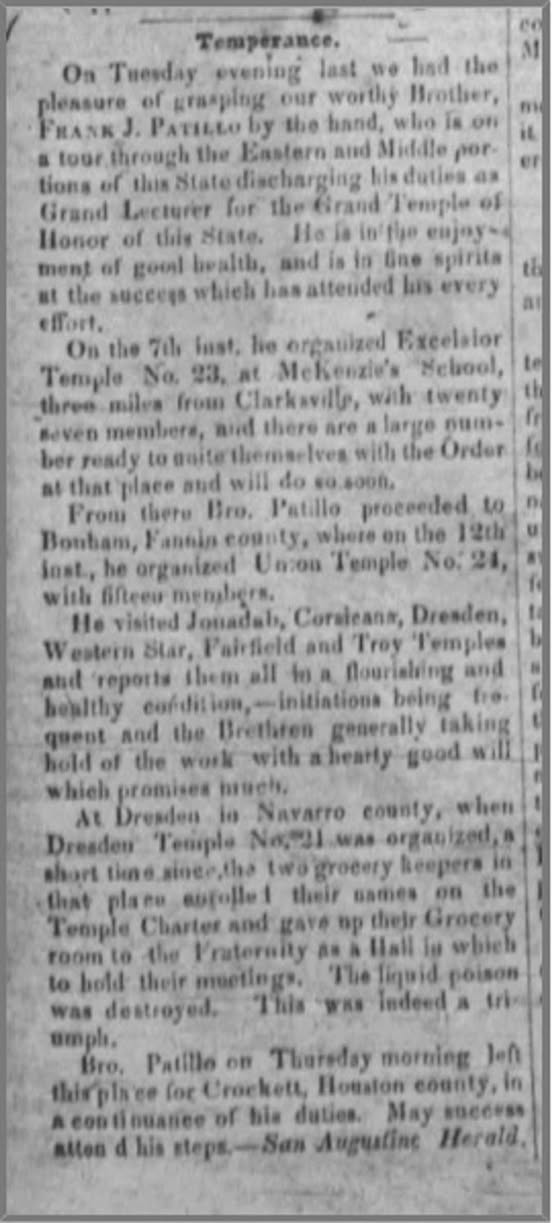
In 1854 it appears that there were two competing purveyors of whiskey and other libations in old Dresden. Enter the Reverend Frank J. Patillo. Rev. Patillo was a native of Alabama, born there in 1829, but not long thereafter he is found living in the Marshall area, Harrison County, Texas. He was a Methodist minister, authored a publication called The Advocate, and traveled far and wide setting up churches and spreading the Gospel. In February of 1854 his adventures led him to Dresden, Texas, where he organized a "temple" and held a grand meeting in one of the general stores. The Texas Republican, a newspaper in Marshall, reported that Patillo convinced the owners of the store to pour out and destroy their "liquid poison" and declared victory over the proverbial devil in the jug.
Such was the beginning of temperance and prohibition in western Navarro County, although the jugs were most likely refilled within a week. Reverend Patillo's campaign across the state, along with others like his, resulted in a law being passed in August of that same year by the Texas legislature which closed all places selling liquor in quantities of less than a quart, except in counties where the people voted to give licenses to such places. This law was quickly held unconstitutional. Patillo was hailed a hero by the champions of temperance in Texas. He went on to serve in the Confederacy as a chaplain in a Texas Cavalry unit called the Texas Lancers.
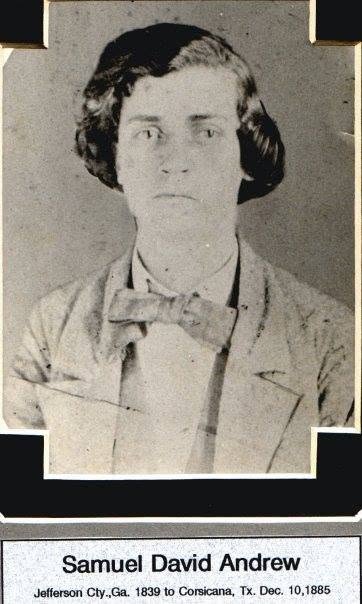
The first purveyor of whiskey in the Gradyville/Blooming Grove area, other than sales by local whiskeymakers, was probably Sam Andrew. Samuel David Andrew was born in Georgia in 1839, the son of Allen Andrew and Eliza Finney McGlohen. In 1860 he married Irena Scarborough in Pulaski County, Georgia. In 1861 he enlisted in the Confederate army, Company G, 8th Georgia Infantry in which he served for three years. In 1863 he was promoted to second lieutenant. In May of 1864, the 8th Georgia served in the well known Battle of the Wilderness where Sam's right arm was badly mangled by a gunshot and then amputated. He was discharged from service and went home to Georgia.
A few years later, Sam and Irena migrated to the land of opportunity called Texas and in January of 1869, they opened a general store in what was soon to become called Gradyville. Sam is essentially the founding father of what would become the town of Blooming Grove. Sometime during the 1870s, however, Sam sold at least part of the operation to the Grady family, and by 1880 he had returned to farming. Sam met an untimely death in 1885 when he apparently walked out onto the balcony of "the Grady house" in the middle of the night, somehow lost his balance, and fell to his death in the street, dying of a broken neck. The Corsicana newspaper reported that the Grady house was in Corsicana, where Sam was visiting overnight. W.D. Grady's Alamo Hotel was actually built about this time (mid 1880s) in Blooming Grove, so whether the newspaper was in error as to the location of Sam's death or the Grady family actually owned a prior hotel in Corsicana is of some mystery to this writer.
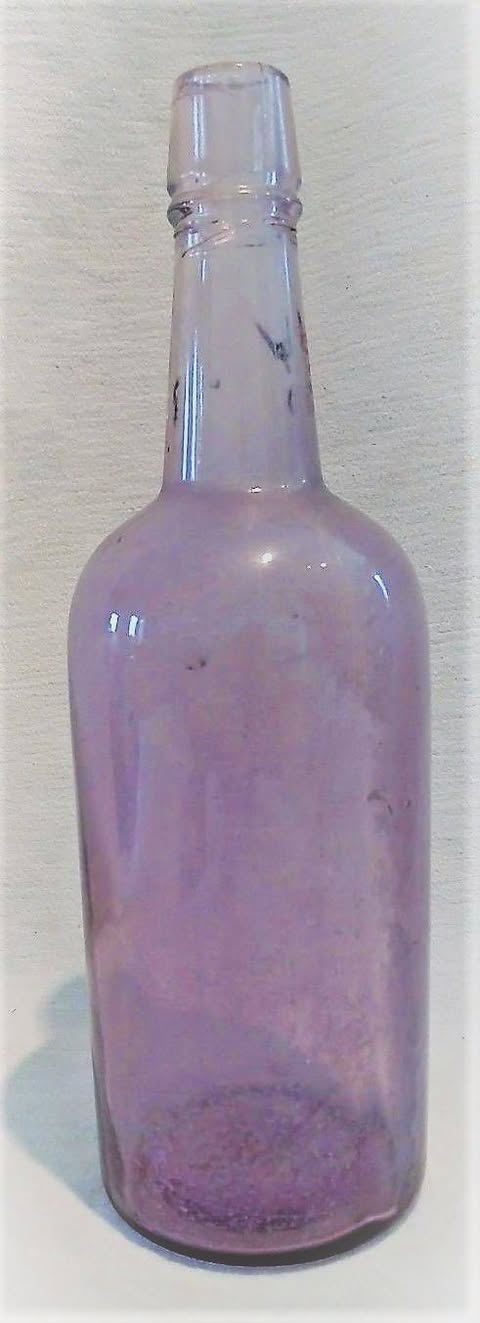
In 1876 there was a provision passed in the law which allowed for "local option" elections. For many years to come Blooming Grove elected to be wet. As of the 1880 U.S. Census, merchants operating stores in old Gradyville included Ephraim M. Ewing, W.D. Powell, R.M.S. Grady, W.J. Adkisson, and T.F. Johnson. When I was a teenager it was a favorite pastime of mine to collect old bottles from around Blooming Grove and elsewhere. Pictured in one of the attached photos to this article there is a whiskey bottle that has turned "sun purple". I dug up around a half dozen of these in old Gradyville.
By the late 1880s the Cotton Belt had come to Blooming Grove and it was a brand new, thriving railroad town in its new location a mile to the north of old Gradyville. The merchants were enjoying fine prosperity and the train brought visitors and sightseers such as the town had never seen, ready to spend their money in the many new shops and stores.
In 1887 a statewide election for prohibition was held and soundly defeated. The seed of temperance planted by Rev. Patillo 36 years earlier in old Dresden was still alive although quite dormant. The State of Texas sought to capitalize on the good fortunes of the business community, and decided to raise revenue through the imposing of a tax on the devil in the jug.
In 1889 one fellow from Blooming Grove, W.J. Elaze, was so upset about the tax that he determined to make the trip from Blooming Grove to Austin for the purpose of convincing the legislators there to remove the whiskey tax. A sizable group of the Grovian citizenry rose to the occasion and, seeing how determined the man was, raised money to send him as their representative. Whether the zealous lobbyist influenced any of the legistlators about the matter is not known, in fact no trace of the man is found in records after he boarded the Cotton Belt and went west out of town.
In 1891, a local election was called to establish the prohibition of liquor in Blooming Grove. However, it was soundly defeated 196 to 66. Dresden, still a nice sized community, voted in the same fashion, as did neighboring Frost. Those who argued against prohibition did so with the business community in mind. They felt that without the ability to sell alcohol, the tourists from the train would certainly not be as interested in visiting the local shops and business establishments, and spending time at the local hotels. It was simply good for business, they said. The prohibitionists argued of the evils that liquor caused, that it caused good men and women to go bad, and that the effect on local businesses would not really be all that great if the jugs were poured out.
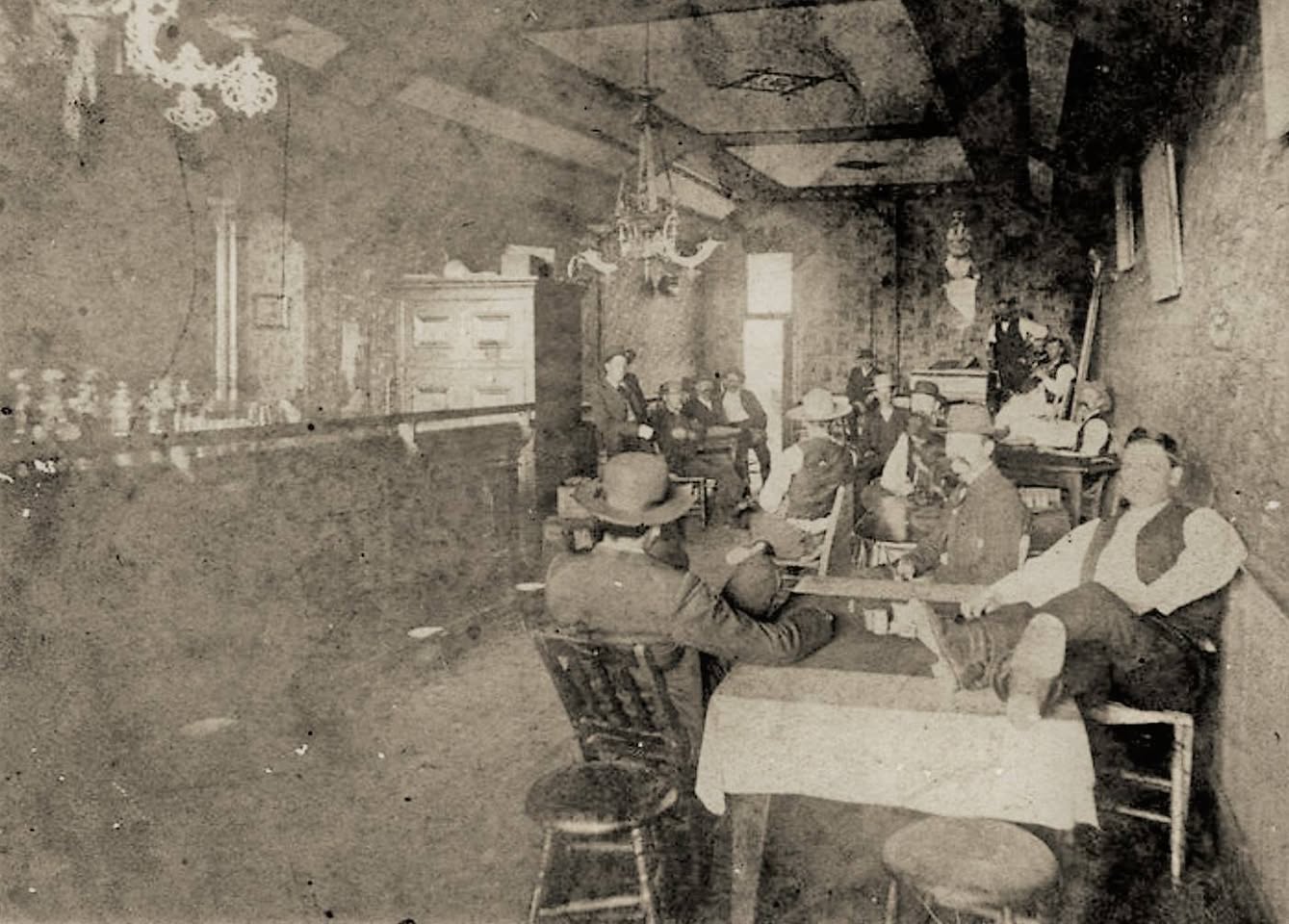
In 1893 there were three saloons in Blooming Grove. These were the Van Cleave Saloon, the Tom Elliott Saloon, and the Coates and Wilson Saloon. On August 14th at about three o’clock in the morning, miscreants broke into the Van Cleave Saloon, robbed it, and set fire to it. The fire quickly spread and destroyed all three saloons as well as numerous other businesses. After the fire of 1893, new saloons were put it and new stores were quickly rebuilt.
The tax imposed on liquor remained, and this gave birth to a pastime known as bootlegging, this name being derived from the marketing method often used whereby the seller would carry small bottles in his boots and sell them in town to passersby, thereby avoiding the collection and remittance of tax. Such bootleggers were dealt with by William B. Dodds, who was Blooming Grove's city marshall in 1900, However the actual whiskeymaking operations around the edge and outside of town were left to ply their trade. Times were good in the Grove and business was booming.
End of Part 1.