The Saga of H. P. Darlin
by Tim Campbell · first published 11 October 2017 · his original post
If you live in BG, you might or might not know that the entire village was once the grazing ground for thousands of sheep. My father, whose great great great grandfather Joseph Welch came to Texas when it was a republic, often told me that when the first settlers came to the area that is now Blooming Grove, it was a native prarie, and trees were almost non-existent.
Major H.P. Darlin (1817-1866) a native of Montpelier, Connecticut, must have found the gentle rolling prarie hills here to be very inviting when he selected this location to set up his wool producing operation in 1860. Joining him in the operation was a native Englishman, Thomas Cosser, who was to be Darlin's partner. Cosser had a young wife, Susannah Hall, who he had married in Sangamon County, Illinois in 1858. Cosser and Darlin set up the sheep operation in the spring of 1860 and Mrs. Cosser along with relatives of Major Darlin would join them in Texas a year or so later.
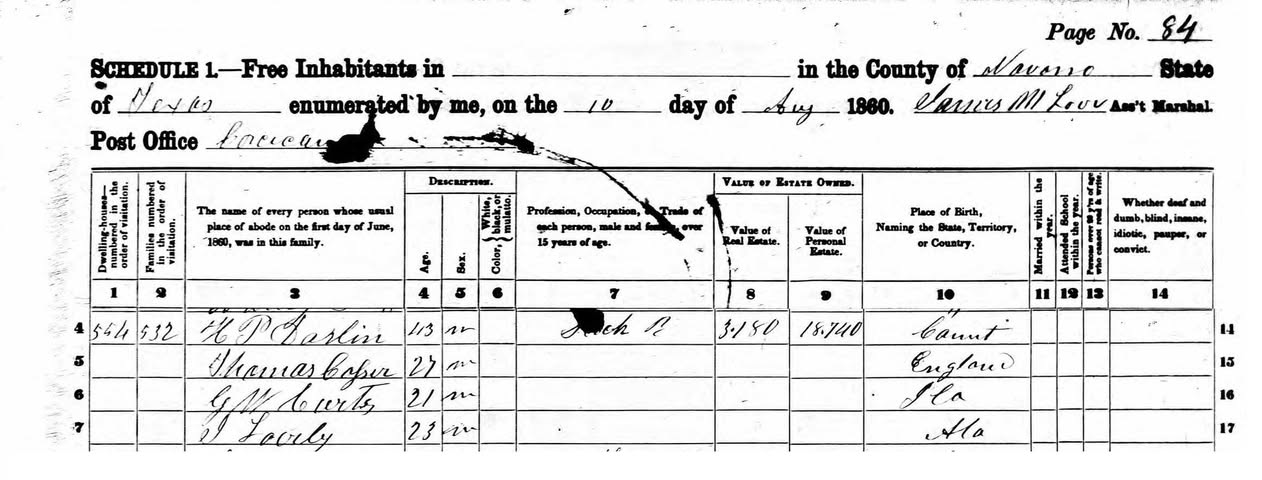
On the 1860 census of Navarro County, (clip attached), Darlin and Cosser are listed along with 2 other young men who were apparently working in the operation at the time, whose names appear to be G.W. Curts and J. Lovely. I have had little success in finding records of a Major H.P. Darlin in available military records. There is an H. Darlen who was in the 4th Texas Cavalry, CSA, Sibley's unit, although no mention is found of him having the rank of major.
In December of 1860 a Fannie Davidson of Parker County, Texas wrote to Major Darlin beseeching his assistance in dealing with indian depredations there. The letter was published in the Navarro Express in Corsicana. Indeed Parker County had been attacked relentlessly by indians since 1859. No record is found of Darlin responding to the woman's plea for help. If indeed he did not, poetic justice was about to be unleashed.
How Darlin and company spent the war years is not entirely clear. Suffice it to say that when the war finally ended, and life began to return to normal, Darlin still had a fine wool operation going in Navarro County. In the spring of 1866, Darlin and Cosser made the fateful decision to drive sheep to south Texas for shearing and sale. They would not be coming back.
Joining them was one H.V. Smith, a resident of Laredo, having gone there in 1862 from Cooke County, Texas after narrowly escaping the hangman's noose. It seems he was accused by the Confederates of being a northern spy. Apparently he was enticed by Darlin and Cosser to work shearing sheep at the ranch, a decision he would soon regret.
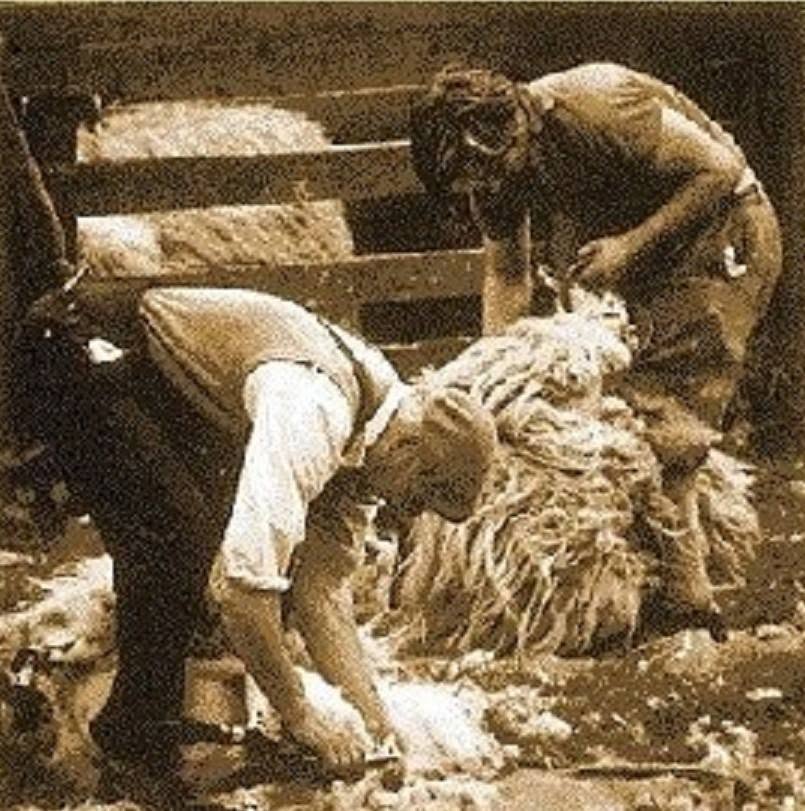
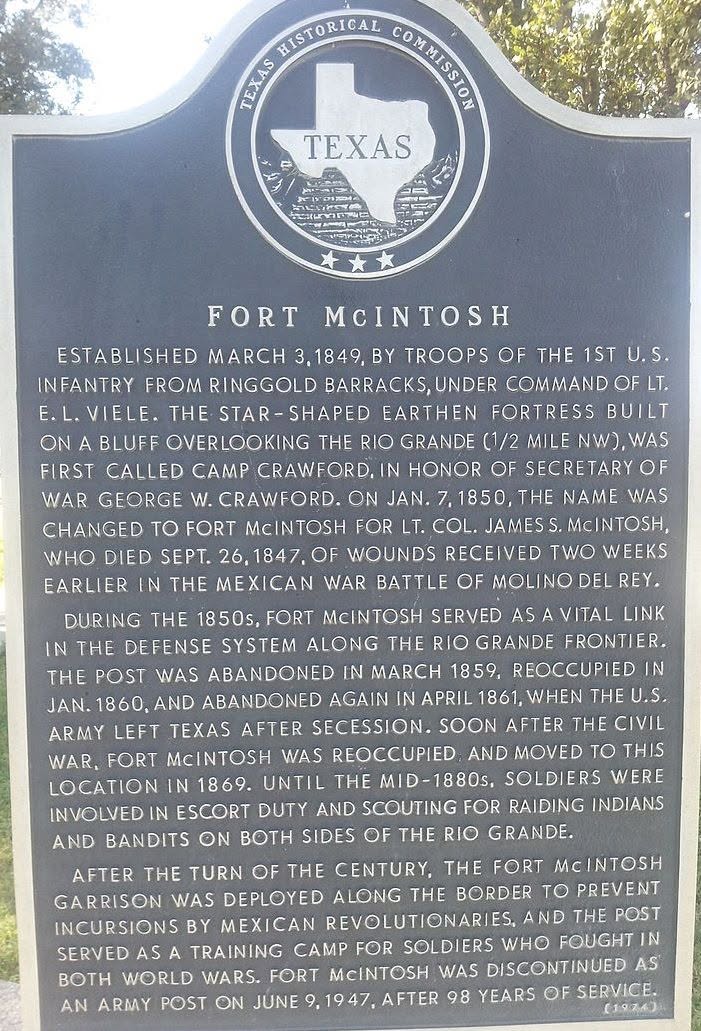
By all available accounts, on May 8 of 1866,Thomas Cosser, H.V. Smith, H.P Darlin, and some boys were shearing sheep near Fort McIntosh on the Rio Grande (see historical marker photo attached) at the Salado Rancho between Laredo and Eagle Pass, when they were attacked and murdered by indians.
Cosser's wife, Smith's wife, and a 16 year old daughter of Major Darlin set out to locate the missing men when they did not return to camp. When they arrived on the scene they found Cosser had been shot numerous times and lay still clutching his wool shears. Smith lay dead in a pile of sheared wool where he appeared to have survived for a few hours. Major Darlin's body was found a half mile away from the others, stripped of clothing and riddled with arrows, and with a bullet hole through the head. The women buried the men with their own hands there at the ranch.
Meanwhile back in Gradyville/Blooming Grove there were rumors and tales told about the killings for years to come. Apparently Darlin was frequently known to be in possession of large amounts of gold, a fact which he did not attempt to conceal. Some said the deeds were not done by indians at all, but done by white men seeking gold carried by Darlin, and the murders blamed on the indians. However, the following account is recorded in U.S. Congressional testimony in 1868 which seems to say beyond much doubt that it was indeed the Kickapoo who committed the crime.
"Adolph Leon Labhe testifies that he resides at San Diego, Duval County and has lived ten years on the frontier. That he owned a sheep ranch near Eagle Pass in 1863. Shortly after the stocking of said ranch the Kickapoo Indians commenced to raid in from Mexico stealing cattle horses and killing people Witness was warned not to keep his family at the ranch. In 1866 the Kickapoos came in the absence of witness to the ranch and murdered Major HP Darling his partner Thomas Cosser, Mr. Smith and Allen, a colored boy with a Mexican boy, Pablo. The Indians divided into three parties escaped from the troops who pursued them and returned to Mexico. Five thousand sheep bad been scattered by this raid and many were lost and perished. The ranch was broken up by this raid. Losses of witness were about three thousand dollars. Witness has lost many times horses by these raids of bands of Indians and Mexicans. Has applied for his property. Has sent papers to Presidio de Rio Grande Nava San Fernando Morellos San Juan de Agrandas La Marroma but has never recovered any of his stolen property. The thieves on the Mexican side protected each other. Property was passed from hand to hand to keep it out of the way. A Mexican customs officer named Colonel Valdes stole a horse from witness at Eagle Pass and took it to Mexico. Witness charged him with the theft and was unable to recover his horse. The Indians depredate often around Eagle Pass usually coming in from Santa Rosa, Mexico. Witness caught a party of Mexicans from Presidio de Rio Grande killing his sheep in 1868 and pursued them unsuccessfully."
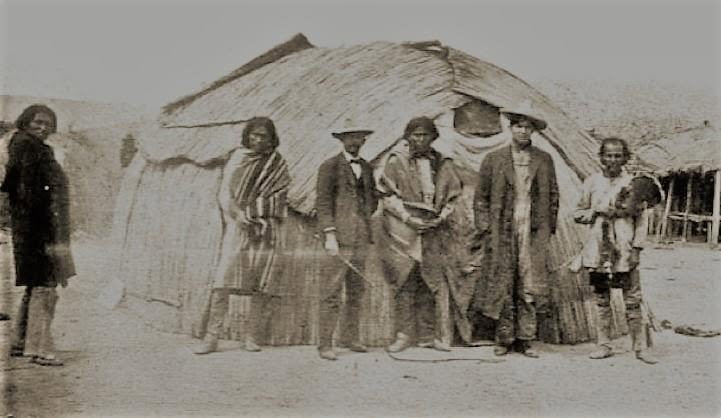
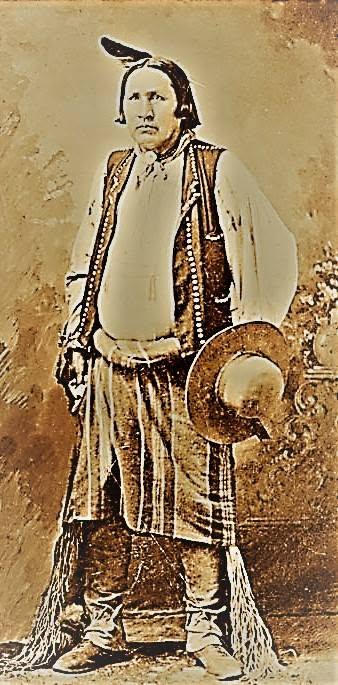
Attached are a couple of interesting photos of the Kickapoo of the day, whose homes, rather than the typical teepee were more akin to a modern day "geo-dome" built of wood timber and then covered with hides.
After the death of Major Darlin, his ranch north of Gradyville was acquired by the Simpson and Grady families among others, and the door was opened for the new village of Blooming Grove and the coming of the Cotton Belt.