Blooming Grove Sun, August 16, 1889 - page 3
by Tim Campbell · first published 24 August 2018 · his original post
This is page 3 of the Blooming Grove Sun from August 16, 1889. It is actually the right half of the page. I'm not sure if this newspaper was just poorly microfilmed or if half of the original paper is missing. Following are items of interest which appear on this page of the paper.
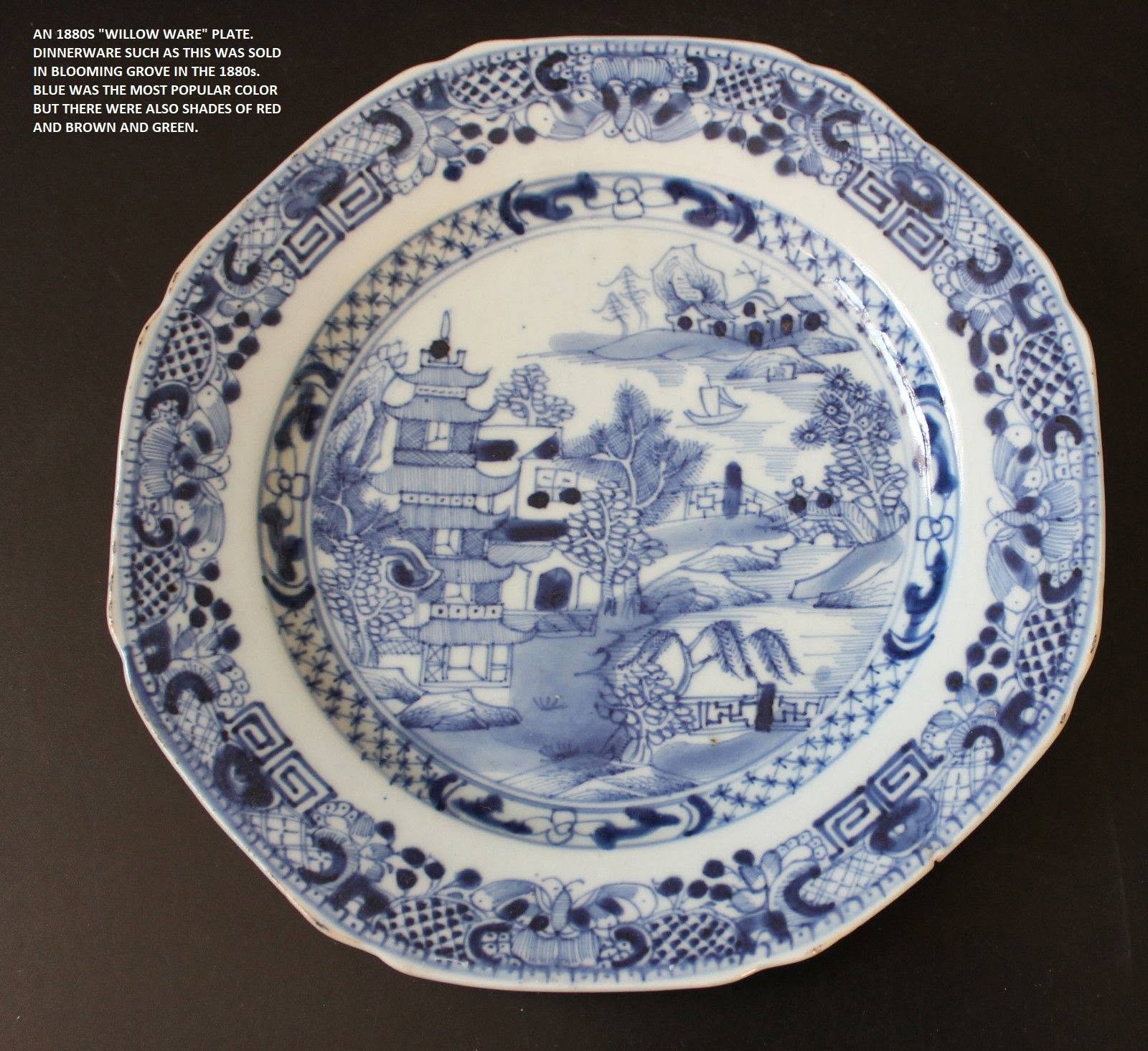
TATUM and CUNNIGHAM large advertisement, top of the page. This would have been a dry goods / hardware store, advertising that they are coming to Blooming Grove, and that they intend to establish a "first class hardware house" where among the items offered will be willow ware "at Corsicana prices", presumably meaning cheaper than the folks in BG were used to paying locally. Willow ware was of course very common dinnerware. See photo attached of a 19th century example of a blue willow plate. There were many manufacturers and many varieties of willow ware.
In the section of LOCAL NEWS there are a few things of interest, notably -
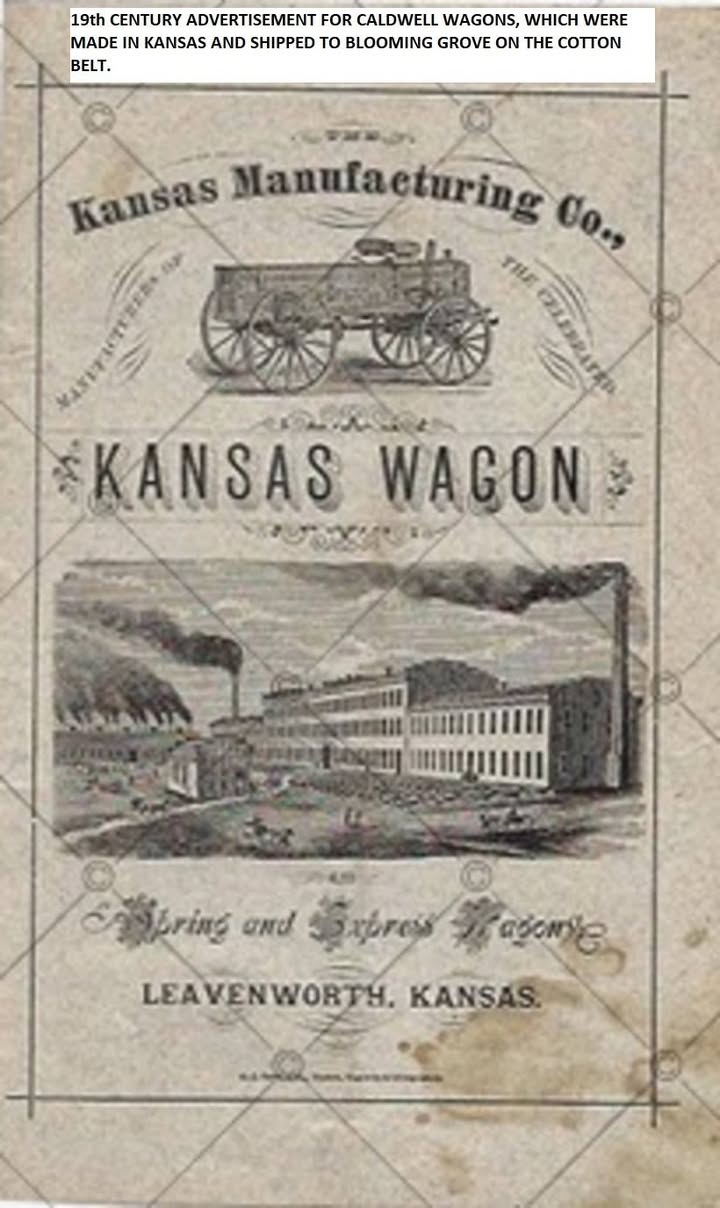
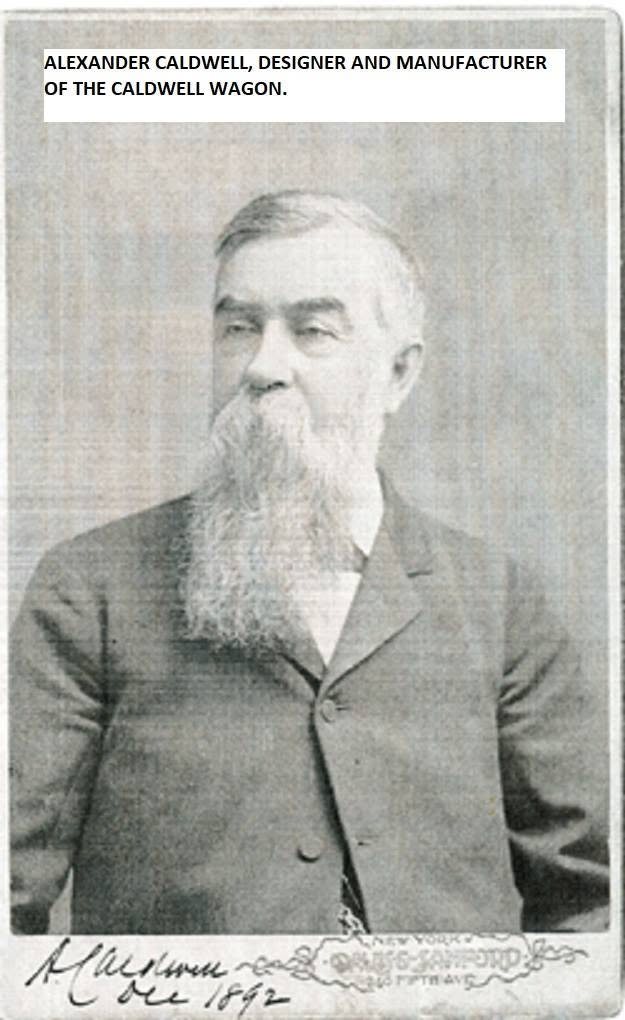
CALDWELL WAGON advertisements. The Caldwell Wagon was designed and mass produced by a fellow named ALEXANDER CALDWELL (photo attached) who owned the Kansas Manufacturing Company in Leavenworth, Kansas. He is noted as a pioneer in the work of tranporting military supplies to western military outposts, and with the coming of the railroad was able to send his wagons almost nationwide by railcar.
WRITING SCHOOL in LONE OAK - Lone Oak was quite a thriving place in the 1880s. It is noted in the paper that a Professoor Dixon was teaching a writing school at Lone Oak. There was a huge old oak tree in that community for which it was named. I remember it sitting in front of an old homeplace. My father and I visited the site when I was a boy with metal detectors but I do not recall us finding anything of interest.
REED's CHILL CURE ad. This was a medicine sold by E.W. Blackshear and Co. who was operating a drug store in Blooming Grove. John L. Reed was a druggist who came to Clarksville, Texas from Illinois after the Civil War and was a resident there for over 50 years. See attached photo of an old "Reed's Chill Cure" bottle which is most likely similar to those sold in BG in the 1880s.
RAPID GROWTH OF BG - The Sun reports that Blooming Grove had gotten two new grocery stores, a drug store, a dry goods store, and a livery stable within a week's time.
MEXICAN COMMERCE CIGARS AD - Mexican Commerce cigars and Resido cigars were being sold by D.S. WELCH and Son. D.S. WELCH is DARIUS SCOTT WELCH, born 1834 in Dallas County, Alabama. He was a veteran of the Confederacy, serving in the Mississippi 27th Cavalry. He appears to have been running a drug store or apothecary in 1889.
CHRISTIAN CHURCH in BG was scheduled to have a "protracted meeting" with Elder Howard presiding.
METHODIST EPISCOPAL church had a revival meeting at "the arbor" resulted in 22 additions to the church
COTTON GINS - The gins of Mr. Fox and the Hodge and Terry Gin at Purdon were reported to have been overhauled and ready for the fall cotton crop. There were many other competing gins. "MR. FOX" was MATHEW ANDERSON FOX, a native of Tennessee, who was in Navarro County farming by 1880 with two brothers and his wife and children. In the 1900 census he is listed in Blooming Grove as a "cotton ginner".
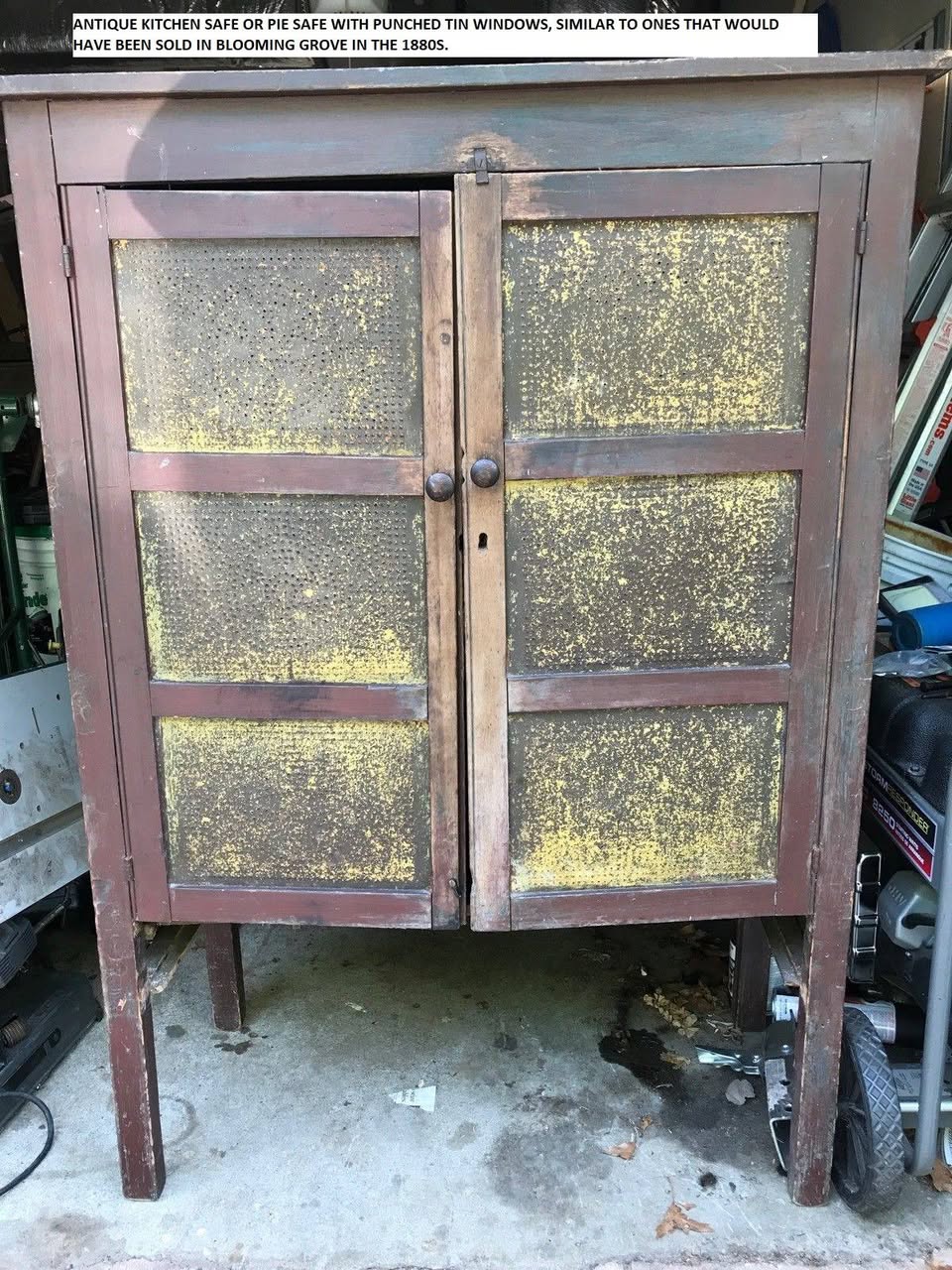
KITCHEN SAFES and BED STEADS - were being sold in a furniture store in BG by J. ED. N. WALLACE. Kitchen safes, also called pie safes, were used as a cupboard or pantry and often had punched tin "windows" to allow some air to the staples, thereby discouraging mold.
JIM TINCKLE of Cryer Creek purchased 12 lots north of the railroad and was intending to build a house. This is JAMES WILSON TINKLE who was the son of JOHN WALTON TINKLE (1831-1883, 13th Texas, CSA) and MARY JANE DAVIS of the Grange Hall area at Cryer Creek.
MR. B. E. PROCTER was erecting a cotton seed house at the railroad switch on the north side of the depot.
FRANK TRIMBLE of Corsicana was advertising horses for sale.
B.F. SMITH was selling CALDWELL WAGONS.
D.C. SHELTON of Hubbard City was in BG looking for lots for a livery stable.
W.A.BINYON of Lone Oak reported that the cotton being grown there is very fine and contains no worms and picking is about to commence.
CHAMBERLAIN'S COLIC, CHOLERA, and DIARRHEA REMEDY was available at the drugstore operated by D.S. WELCH and SON. I dug up one of these old bottles in BG as a kid. Photo attached.
C.P. HENRY and J.F. POWELL were opening a grocery store in the old Henry building "as soon as the completion of the brick block on Fordyce Street renders that building vacant by the removal of A.S. HENRY. A.S. HENRY (See photo attached) is ADOLPHUS SAMUEL HENRY, born 1858 in Cherokee County, Texas. He and his little brother Charles opened a dry goods store in old Gradyville prior to 1880. These boys had come to Gradyville from Cherokee County, Texas to seek their fortune. They were sons of Patrick and Amanda Henry of Cherokee County. From 1893 to 1895, A.S. HENRY represented Blooming Grove and Navarro County as state representative in the 23rd Texas Legislature. He lived in Arlington, Texas for many years after leaving Blooming Grove where he passed away in 1945.
W.B. ARMSTRONG advertised that he would keep hay for sale at his place in Blooming Grove. This is WILLIAM BARKLEY ARMSRONG (1885 to 1942) who was married to ELIZABETH STOKES. I believe their home was on what is now Clark Street in BG, but in 1900 it was called Granger Street, and what is now Granger Street was then called School Street. Confusing but true. W.B. was the son of JESSE B. ARMSTRONG (1818-1899, Co. D, 12th Texas Cavalry, CSA) of the Grange Hall / Cryer Creek area.
THE NEW YORK MUTUAL LIFE INSURANCE COMPANY instituted a bit of peer pressure in its advertisement that it's ranks included citizens A.S. HENRY, B.F. SMITH, F.P. COLE, L.H. HODGES, S. J. ROGERS, MRS. E.M. MABRY, G.W. SHAW, CROCKET MELTON, V.P. JOHNSON, Dr. J.D. MCCLANAHAN, J.M. SCARBOROUGH, and M.J. TRUELOVE. Agent for the company in BG was J.Y. ROBERTS.
PERSONAL MENTION is made of the usual listings of a few folks who have been under the weather and a lot of listings of out of town visitors in BG or BG citizens who were away on out of town visits. In other words, there wasn't much privacy to be had. You're looking at the 1889 version of Facebook.
THE BG LITERARY SOCIETY. The Blooming Grove Literary Club was a gathering of like minded thespians who met frequently and had a robust membership for many years. Members listed include Ben Palmer, J.M. Poer, J.E. Wallace, J.A. Muse, T.M. Smith, E.P. Gordon, W.T. Buckalew, Miss Alice Jefferson, A.S. Henry.
THE FIRST BALE - The tradition of the honor bestowed upon the purveyor of the first bale of cotton processed for the season was a long standing one in Blooming Grove. There was great competition among farmers to be the first to bring in the first bale and then a great competition among the cotton buyers to be the one to purchase it at auction. The event was accorded much pomp and circumstance. In 1889 J.D. Warren of Purdon brought in the first bale and Hash Cohen was the buyer for $60. Other merchants, no doubt as an advertising move, threw in another $50 to Warren to make the sale worth $110 in total. S.W. GRIMES is reported to have purchased the second bale.
HORSE THIEVERY - The Sun reports that F.D. McSwain of Lone Oak had a fine mare, a racehorse, stolen from his premises about "moon rise" while McSwain was sitting up. This was the second racehorse stolen within a week's time as a Mr. Cane near Frost also had a racehorse stolen. One was branded HEN and the other T.KEY (old man Key's brand). T.Key would be Tom Key, an old time settler in Blooming Grove. It is said that there was at one time a fine horse racing track a mile or two south of Blooming Grove. HASH COHEN was to buy 25 bales of cotton to fill an order from Liverpool. Apparently Cohen got in the habit of taking the local farmers' cotton and paying them for it later, which ended up getting him in quite a bit of trouble.
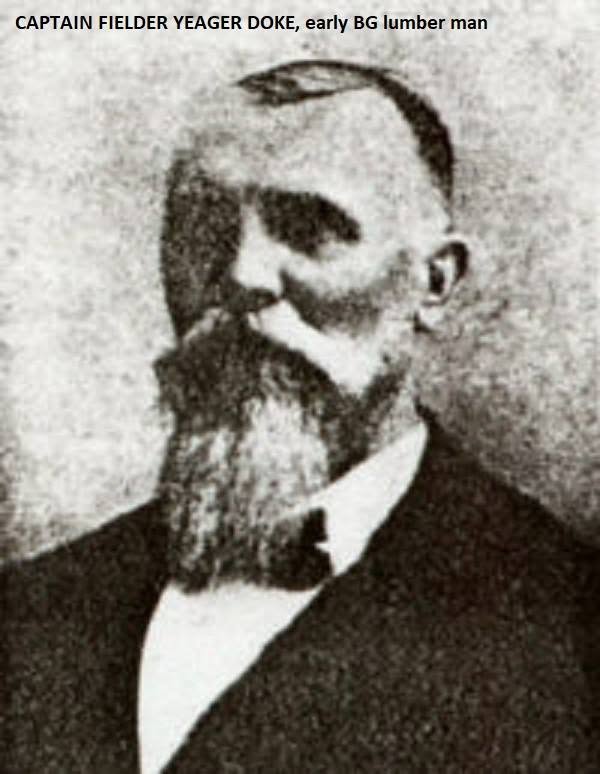
F.Y. DOKE and Company was reducing lumber prices and this lumber yard is referred to as being of "incalculable benefit" to the citizens of BG. F.Y. Doke is FIELDING YEAGER DOKE, born in Kentucky in 1835, and died in Corsicana in 1912. He enlisted in the CSA April, 1861, as a private in Captain Splawn's company, Brace's Battalion, Gen. Martin E. Green's brigade. He was captured at Pea Ridge and was exchanged at Vicksburg, after which he was elected captain of Company F, 9th MO Infantry. After this he took part in various movements and battles in Arkansas until he surrendered with General Price at Shreveport. He started in the lumber business in 1878 in Kosse, Texas before moving to Blooming Grove and then finally Corsicana, where he is interred at Oakwood Cemetery.
FARMER'S COOPERATIVE 101 - a number of farmers met "en masse" a few miles west of Corsicana and passed resolutions among themselves to market their cotton at Blooming Grove instead of Corsicana, apparently due to the action of the BG merchants in handling only cotton bagging unless otherwise especially ordered.
This piece was published without a title. The one above was written here; the words below are his.