About the Grove's Original Owners - the Tonkawa
by Tim Campbell · first published 31 March 2020 · his original post
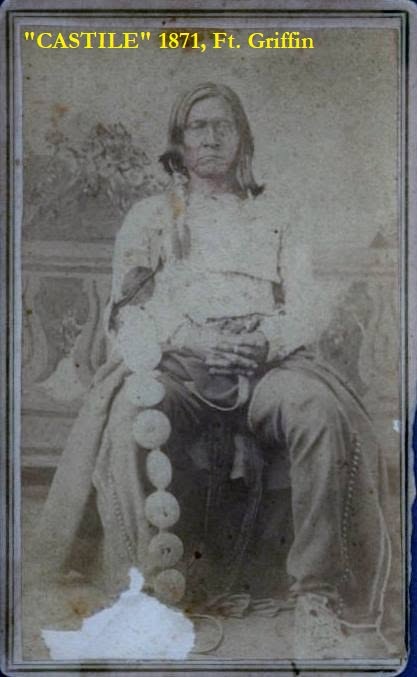
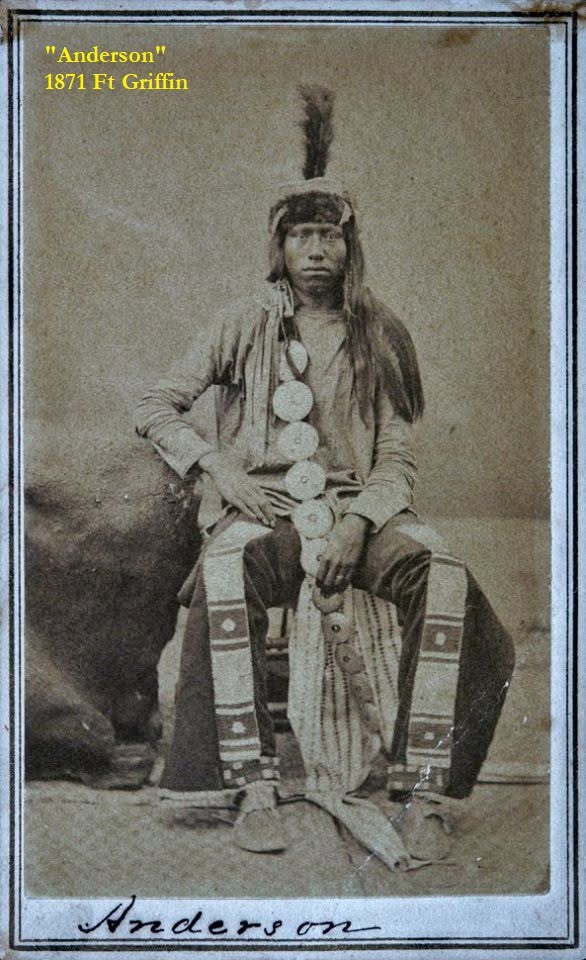
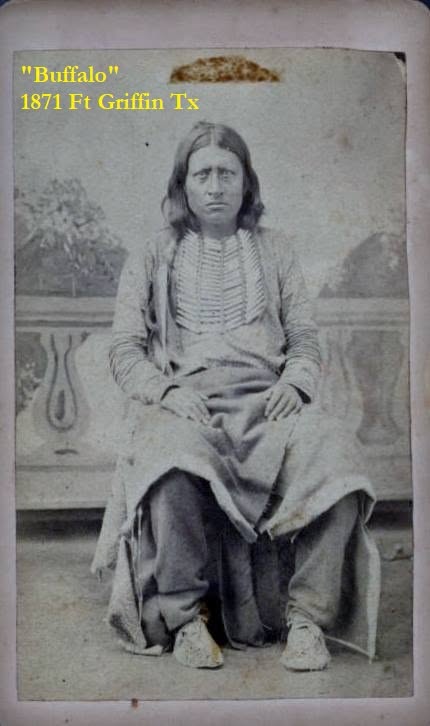
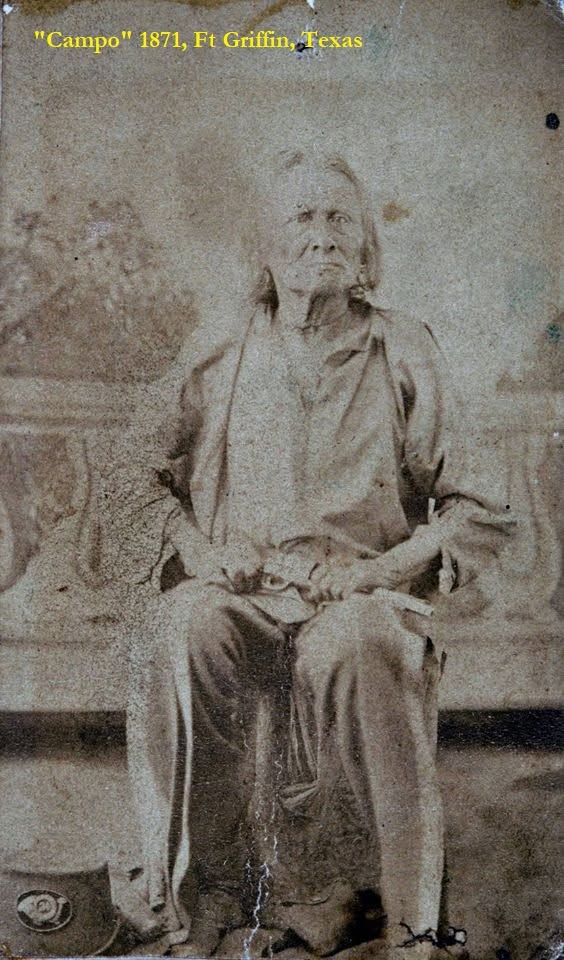
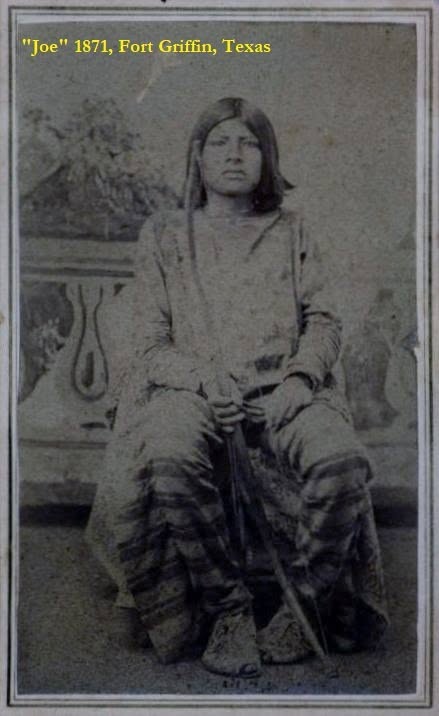
When the first white settlers began to arrive in what is now western Navarro County, Texas they found the area inhabited by its original owners, the native americans. History records by numerous sources that these were the Tonkawa people.
The area in and around what is now Navarro Mills, Frost, Dresden, and Blooming Grove composed a small part of their hunting grounds. A Tonkawa village is said to have been located "near Dresden". This camp is thought to have been west of Dresden in the area that is now covered by Navarro Mills Lake. The Tonkawa were actually nomadic and would generally move around Central Texas depending on the availability of game. The name "TONKAWA" or "TONQUAWA" as it was sometimes spelled actually meant "They All Stay Together". Unlike many other tribes the Tonkawa would also eat fish and mussels from nearby streams. Rather than a permanent village, the Tonkawa's establishment in western Navarro County was most likely more of a favorite camping ground, where they enjoyed the fresh water, mussels, and fish of Richland Creek, which was later dammed to form the lake. They were not opposed to farming but were not particularly good at it.
The Tonkawa were once a great tribe of people and their hunting ground stretched from San Antonio all the way up past what is now Dallas and from the Trinity River all the way west past what is now San Angelo. Eventually Comanches and Apaches drove them out of the western part of their lands so that they were squeezed between the encroachment of white settlers from the east and hostile Comanche, Apache, and other tribes from the West. By the 1840s, when the first settlers were arriving near Dresden, the Tonkawa had been largely reduced in number to a few hundred people. They became allied with the Lipan Apaches who helped defend them against Comanche raids. Once the white settlers began to arrive, the Tonkawa became allied with them and helped protect them from other hostile indians.
It is said that local children were afraid of the "Tonks" and it is recorded that pioneer mothers would tell children the Tonks would get them and might eat them if they were bad. In fact the Tonkawa were known to occasionally dine on human flesh, but such occurence, it is said, was very rare, and usually tied to a ceremonial ritual.
Tonkawa babies had a wooden paddle attached to their head to make their foreheads flat. The children went entirely naked most of the time. In warm weather the women would wear only a short skirt made of hide and the men would wear a long loincloth. Both men and women would tattoo themselves and the men were apt to be adorned with nose and ear jewelry. Like most native american tribes the Tonkawa lived in tepees. In the old days they made tepees of buffalo hide, but after being driven from the plains by the more powerful Comanche and Apache tribes, their tepees were framed with poles and covered with brush to form a crude shelter. It is interesting to imagine the scenery one would have been able to take in if standing at one of the present day Texas State Parks such as oak Park or Wolf Creek Park at Navarro Mills Lake in say 1850. The observer would have been able to look down across the beautiful Richland Creek bottom and take in the sight of Tonkawa tepees, campfires, busy families, and children playing.
Tonkawas buried their dead as opposed to lifting them high on rails. They would often kill the deceased's horse and lay it over their grave, and bury personal treasured keepsakes with the deceased. It is said that a number of Tonkawa are buried in Dresden in the Melton and Dresden cemeteries although there does not seem to exist a written record.
In the mid to late 1850s a reservation was set aside for the Tonkawa tribe on the Brazos River in what is now Young County. However it does not appear that they were apt to stay on it and some apparently continued to live or camp in western Navarro County and other places where they had white friends and jobs. Unfortunately, the Tonkawa who moved to Young County were often blamed for local thefts and maraudings perpetrated by Comanches, and were attacked by local people until their number was reduced to around 150. In 1859 they were sent to Oklahoma to a reservation, but the reservation was abandoned by the military at the onset of the Civil War and hostile indian tribes raided and killed many of the Tonkawa because of them being friends with American settlers.
The remaining Tonkawa sided with the Confederacy in the Civil War and afterwards in the 1870s assisted the US Military in the indian wars as scouts, living at Ft. Griffin near Abilene, Texas. While at Ft. Griffin a number of the Tonkawa were photographed. Therefore by viewing these very old and rare photos we can have a glimpse of what the original owners of western Navarro County might have looked like. Several of these are attached to this article.
In the early 1870s your author's great grandmother, Madora (Dora) Ann Howard Campbell, then only about 17 years old, was at the Campbell homestead about 2 miles southwest of present day Blooming Grove. Her husband was working on a ranch near Frost. She heard horses coming down the long drive to their home and looked out to see two indians on horseback riding toward the house. Being raised at Dresden she was familiar with the Tonkawa and these two characters were not Tonks which means they were likely hostiles. She grabbed the rifle and moved quietly out the back door, hiding behind a large woodpile behind the house. She listened as the intruders entered the house, rummaging for food and beads and trinkets, and finally left.
Your author's grandfather, Thomas Mitchell Campbell, was born in Navarro County in 1895 and spent many hours searching for and picking up arrowheads up and down the creeks and branches around Blooming Grove and all the way down to what is now Navarro Mills Lake. It was a common occurence for him to be gone all day and come home in the evening with pockets full of arrowheads, many of which were sold to Robert S. Reading, whose collection is displayed in Corsicana at Navarro College. Attached are photos of a few arrowheads and pieces, tools, etc, about 90 per cent of which were found in western Navarro County. It is impossible to say if they were made by the Tonkawa or some other tribe. Some are probably much older than others. The slender narrow tan colored point was found sticking out of a skull in a gravel pit south of the Navarro Mills area in the 1940s. One of the mid size arrowheads is black with small white speckles and this is "Pisgah Ridge" flint. The large "bowie knife" at top was found further south in the San Antonio area. Almost all were found within 20 miles or so of Blooming Grove.
Also attached is a group photo of some of the last Tonkawa in Texas in the latter part of the 19th century. By 1890 or so they had been given English names and were given land in the community now known as Tonkawa, Oklahoma. The chief was given the name "Grant Richards" and his wife "Winnie". Most all of these remaining tribesmen were born in Texas, perhaps some in the western Navarro County area. By the 1950s, descendants had intermarried with whites or other tribes, effectively reducing the number of "pure" Tonkawa tribe members to a level at or near zero.